data desk
Intro Response
Benchmarks
Leading indicators that separate founders that consistently
land investor meetings from ones that do not.
A strong intro opt-in rate indicates that the founder will successfully land investor meetings. Conversely, a weak opt-in rate indicates that the founder may struggle with getting meetings.
Based on data across thousands of introduction requests, platform median shows a ~25% response from the investor in question. Our platform data remains consistent with general industry benchmarks that indicate a 20-25% median opt-in rate for introduction requests.
The data below breaks down the response and opt-in rates for the venture industry, providing benchmarks that founders can use to assess progress.

Response Rates by Stage
How investor engagement shifts across fundraising stages
Across the industry, pre-seed tounders tend to land the highest response rates. In particular, response rates tend to drop significantly from Pre-seed (36%) to Seed (31%) to Series A (27%).


The decline in response rates across stages is partly driven by rising investor expectations at higher valuations. In particular, Pre-seed investors are often deploying capital in an experimental manner. At this stage, investors are primarily seeking out founders that have interesting backgrounds and that are working on big problems.
At Seed, investors expect early signs of product-market fit and clear evidence of traction. At this stage, investors tend to be more selective in the companies that they decide to engage with. At Series A, we see this trend continue, as investors look for companies that have achieved initial signs of escape velocity.
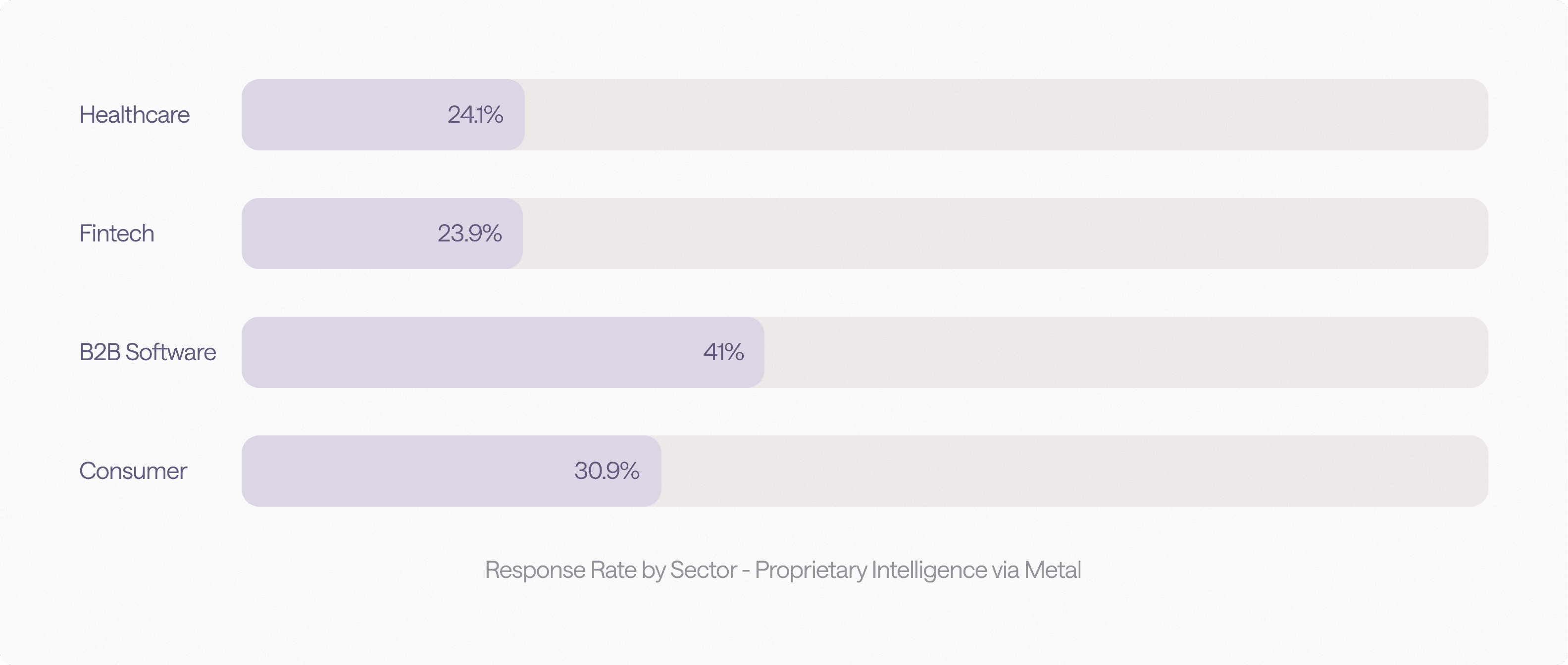
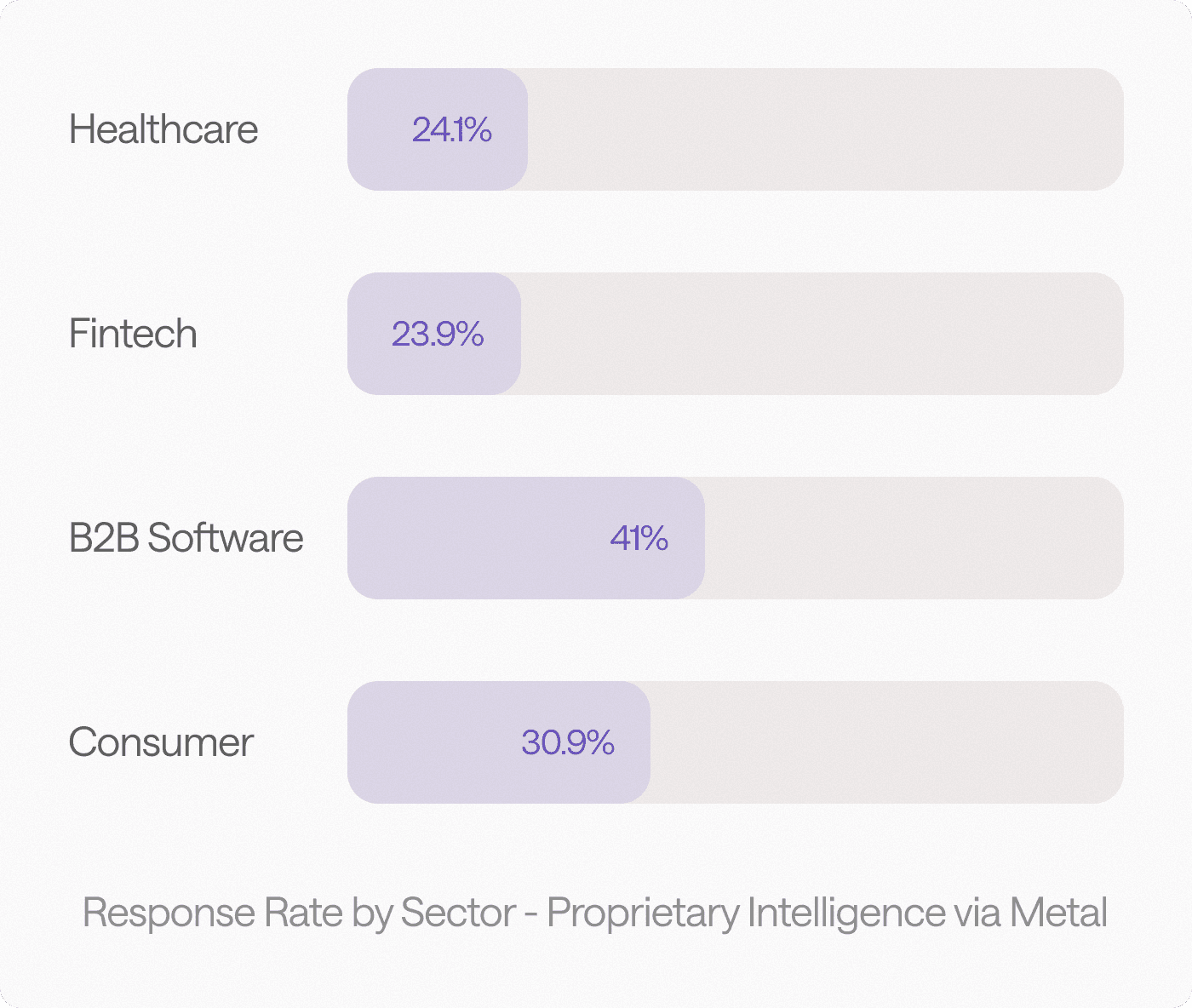
Response Rates by Sector
Where investor attention concentrates across the venture landscape
In the world of venture, B2B Software continues to command a vast majority of investor attention (followed by Consumer, Healthcare and Fintech). In particular, B2B Software companies get double the response rates relative to their counterparts in Fintech.
Key Implications for Founders
How to use benchmarks to drive iterations
In the first two weeks of a raise process, founders can mark their progress against benchmarks to assess how their Company is being received in capital markets. Early benchmarking allows founders to iterate on their approach.
Companies that land significantly ahead of benchmarks hold leverage in the raise process and can reasonable drive toward multiple term sheets.
Companies that fall behind benchmarks often report the following common causes.
Connector Strength
Is the person forwarding along to the investor a real connection that can vouch for your work?
Investor Targeting
Are we targeting the right investors? A misaligned list is the most common factor behind low response rates.
Blurb and Positioning
Are we presenting the opportunity in ways that are consistent with industry expectations?
The above is a non-exhaustive list of common pitfalls. In the raise process, founders that take a data-driven approach are able to learn and iterate quickly, ultimately finding their path to success.