Thought leadership
Round Strategy
Autopilot is trained on navigating a complex set of decisions around round strategy that impact the financing outcome.
2026
With insight that spans across thousands of deals, Autopilot is equipped with sharp training on a complex set of decisions that impact the outcome.
In the below post, Autopilot highlights a set of critical considerations that need to be intentionally configured as part of key financing outcomes.
Valuation Range
Setting the price and
shaping the investor pool

Round Size
Calibrating the total raise
to execution milestones

Target Investors
Pursuing investors that are the "most likely" partners

Raise Sequence
Engineering a sequence of events to maximize odds of success

Iterations
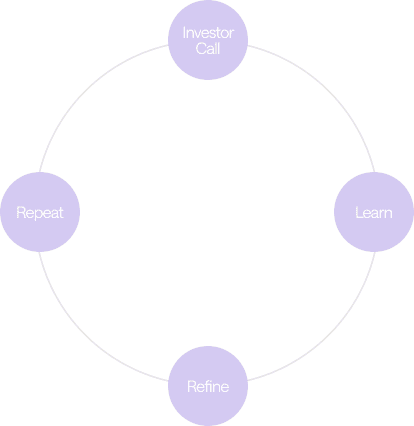
Treating every investor call as a node of progress
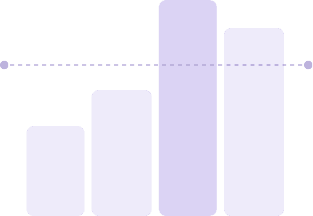
Valuation Range
Setting the price and shaping the investor pool
As a starting point, founders need to decide how much they want to raise, and at what valuation range. These decision points directly impact Autopilot's choice of target investors and raise sequences.
At low valuation ranges, Autopilot generally targets a broad group of investors. As we climb the valuation ladder, options narrow down, and the pool of target investors shrinks considerably.
At low valuation ranges, investors are generally open to taking on more risk. As we move up the valuation ladder, Autopilot begins to scrutinize the narrative and overall traction to ensure that the company meets investor expectations.
Founders can think about valuation as the price that investors are willing to pay for ownership in the company. Investor expectations tend to rise steeply as the price moves up. Conversely, at lower price points, investors are generally open to taking on more risk.
Round Size
Calibrating the raise amount to execution milestones
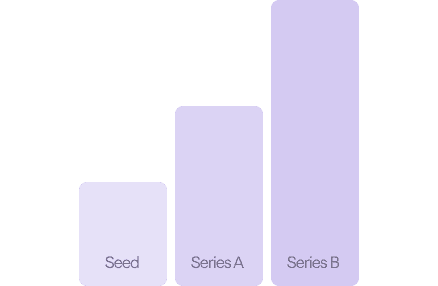
Across venture rounds, Autopilot's data shows three broad mechanisms through which founders determine round size.
The Common Approach
Most founders try to raise as much as possible (without a clear sense of how much they need to arrive at well-defined milestone).
The Rigorous Approach
A small subset of founders take the time to build clarity on the next major milestone that would unlock a subsequent round. These founders then calculate how much they would need to get to the next milestone, add a cushion, and raise only what is needed.
Investors routinely press founders on how much capital they need and then evaluate the rigor, or the lack thereof, behind the response.
Targeting the Right Investors
A data-driven approach to identifying the "most likely" partners
Autopilot recognizes that the highest leverage activity in a raise process is to target the "most likely" investors.
With 10,000+ VCs actively writing checks, founders need a data-driven mechanism to build the right list of investors to target.
Round Size & Valuation
The targeted round size and valuation range inform the choice of investors to pursue. Some investors don't participate in large rounds at a given stage due to ownership constraints. Others prefer the security that comes with a large round.
Lead vs Follow
Some investors prefer to lead, and are excellent targets at the beginning of a round. Others prefer to participate in rounds that already have a lead investor secured.
Thesis and Sector
Some investors hold a high opinion of a given operating space or business model while others do not. Some investors are opportunistic in branching out into new sectors while others prefer to stick to one area that they deeply understand.
Strategic Followers
Some investors raise funds on an explicit strategy to follow other larger investors that they have close relationships with. The best example of this is the investor network that actively and exclusively invests in YC-backed companies.
For all companies, including ones that have breakout growth and outlier investor interest, the choice of target investors has an enormous impact on the ultimate round outcome.
Autopilot's approach is to rely on advanced data structures and pattern matching to identify the most likely investors for a given company in a data-driven manner.
Raise Sequence
Engineering the sequence of events to maximize odds of success
In most raise processes, the sequence of events needs to be carefully engineered to maximize the odds of success. Autopilot adapts the sequence of events based on company context and round dynamics.
Step 01
Net Practice
In most raise processes, it helps to have 5-10 initial conversations as net practice. During these calls, founders can test how the narrative lands, and what parts of their approach needs refinement.
Step 02
Calendar Density
At some point in the process, founders need to push toward calendar density to build momentum to close. Without the right momentum, rounds often prolong beyond six months, leaving follow-on investors thinking that the Company is perhaps not getting a favorable response from capital markets.
Step 03
New Information
In a raise process, many investors will find themselves on the fence. These are investors that are ambivalent, or are one step short of finding the conviction to invest. For such investors, introducing a meaningful update in the form of new information can be particularly useful.
Autopilot works with founders to architect the raise in advance, enabling founders to bring an intentional approach to the round process.
Iterations
Treating every investor call as a node of progress
The narrative that founders start the round with is typically quite different from the one that actually leads to close.
Through investor conversations, founders are picking up on key signals, often leading to questions that they hadn't thought about.
Autopilot ensures that each investor call is viewed as a node of progress to drive rapid iterations. After each call, founders need a mechanism to learn from what went well and what requires improvement.